
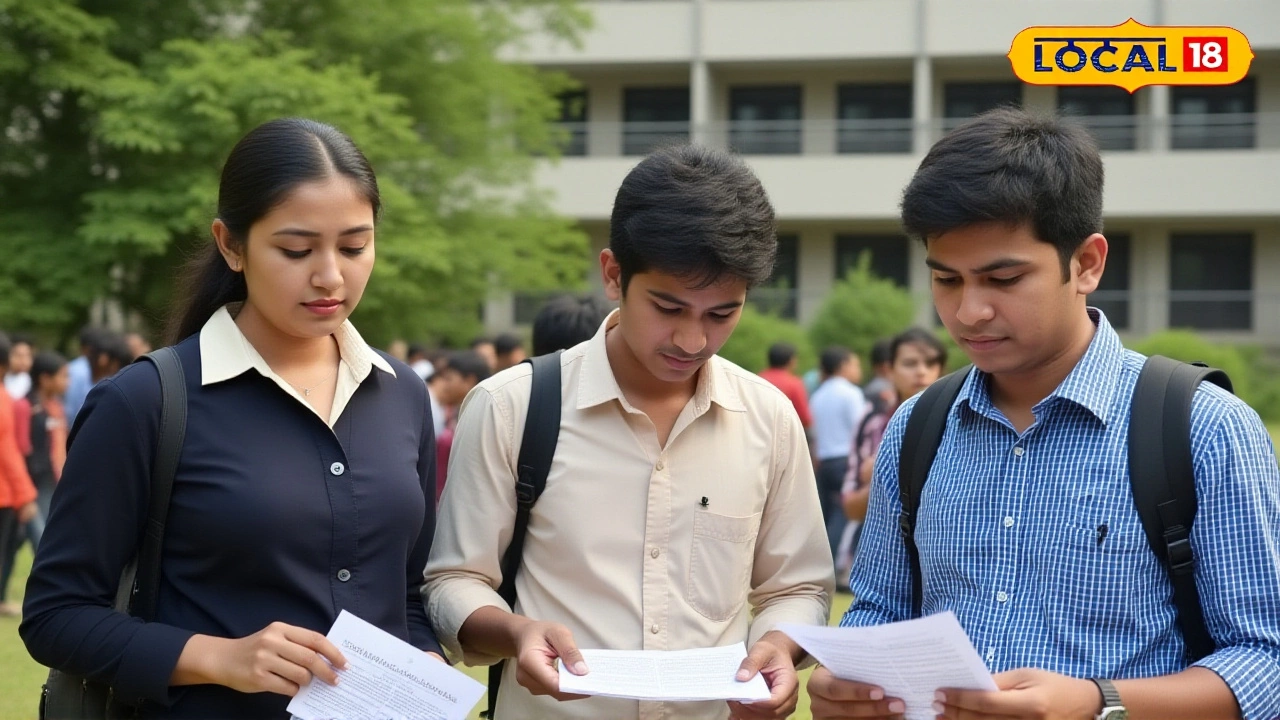
The Railway Recruitment Board dropped the bombshell on November 21, 2025, at 5:12 PM UTC: the RRB NTPC Undergraduate Result 2025 for Computer-Based Test 1 (CBT-I) is live. For over 30.3 lakh candidates who sat for the grueling exams between August and September, this wasn’t just a scorecard—it was a life-altering verdict. The results, posted across all 21 regional RRB portals including rrbcdg.gov.in and rrb.gov.in, confirmed who’s moving forward in one of India’s largest government job drives ever. And the stakes? Nearly 35,000 coveted non-technical posts across Indian Railways. This is the moment thousands of hopefuls have been waiting for since the exam ended. Here’s the thing: qualifying isn’t just about scoring high. It’s about hitting the magic number—40% for General and EWS, 30% for OBC and SC, 25% for ST—and then hoping your region’s cut-off doesn’t swallow your rank whole.
What’s in the Result PDF? More Than Just a Pass/Fail
The result isn’t a simple yes or no. Each candidate’s PDF scorecard contains a treasure trove of data: full name, registration number, date of birth, category, father’s or mother’s name, section-wise marks, normalized score, final merit rank, and crucially—the zone-specific cut-off. The Railway Recruitment Board released three distinct merit lists: a general list showing top scorers regardless of category, a category-wise list (OBC, SC, ST, EWS), and the most important one—the zone-wise list. Why? Because cut-offs vary wildly. A candidate scoring 72% in Chennai might be ranked #120, while in Gorakhpur, that same score could land at #850. It’s not just about performance. It’s about competition density in your region.
One candidate from Bilaspur told Adda247, “I thought I bombed it—scored 68%. But when I checked the zone list, I was 18th. I cried.” That’s the reality. In regions with fewer applicants, even modest scores can crack the merit. In metros like Mumbai or Delhi, you need 80+ to even be in the running. The Board didn’t just release scores—they released a map of opportunity.
How to Check Your Result: Step-by-Step
It’s not complicated, but it’s easy to mess up. First, go to your regional RRB site—not the main portal. If you took the test in Patna, visit rrbpatna.gov.in. Click on “Notifications,” then find the link labeled “RRB NTPC UG Result 2025.” Click it. You’ll see a massive PDF. Use Ctrl+F. Type your registration number. Boom. There you are. Or, enter your registration number and date of birth on the portal to download your personalized scorecard. The Board insists: print two copies. One for your files. One for the next stage.
And don’t skip the fine print. The result includes your qualifying status—not just whether you passed, but whether you’re eligible for CBT-2, Typing Skill Test, or Document Verification. For posts like Junior Clerk cum Typist, you’ll need to prove typing speed later. For Accounts Clerk, numerical accuracy matters more. The RRB has been crystal clear: no exceptions. No appeals. No re-evaluations. If your score’s below the cut-off, you’re done. No second chances.
Who Made It? Who Didn’t? The Numbers Tell the Story
Of the 30,30,926 applicants, roughly 12%—about 3.6 lakh candidates—cleared CBT-I. That’s the brutal math. In Ahmedabad, the cut-off for General candidates hit 78.25%. In Siliguri, it was 61.5%. That’s a 17-point gap. Why? Because in the North East, fewer people apply. In the West, every engineering graduate and MBA dropout is trying for a stable government job. The RRB doesn’t adjust for difficulty—it adjusts for demand.
Interestingly, the highest number of qualifiers came from Kolkata and Chennai zones—not because those exams were easier, but because those regions have the highest concentration of aspirants from rural backgrounds with strong foundational education. The Board’s data shows 68% of qualifiers came from Tier 2 and Tier 3 cities. This isn’t a Delhi-Mumbai contest. It’s a nationwide scramble.
What Happens Next? The Road to a Railway Job
Qualified candidates aren’t done. Not even close. CBT-II is expected to begin in January 2026. It’s tougher—more quantitative aptitude, reasoning, and domain-specific questions. Then comes the Typing Skill Test (for clerical roles) or Document Verification (for all). The final merit list will be based on 70% CBT-II and 30% CBT-I. That means your CBT-I score still matters. A candidate who barely scraped through CBT-I but crushes CBT-II can still top the list. But if you bombed CBT-I? You’re playing catch-up from behind.
The entire process, from result declaration to final appointment, could stretch until March 2026. That’s four months of waiting, anxiety, and preparation. The RRB has promised to release CBT-II admit cards by December 15, 2025. No delays. No excuses. This is the most transparent recruitment cycle in recent memory.
Why This Matters Beyond the Job
This isn’t just about 35,000 jobs. It’s about hope. For millions of young Indians, especially in smaller towns, a railway job isn’t just employment—it’s social mobility. It’s healthcare benefits, pension, job security. It’s dignity. The RRB NTPC is the most democratic recruitment process in the country: no connections, no quotas beyond the legal ones, no fees beyond ₹500. If you can study, you can compete. And now, 3.6 lakh people have proven they can.
But here’s the twist: the number of applicants has grown by 27% since the last NTPC cycle in 2022. And the number of posts? Barely increased. The system is getting more crowded. The bar is rising. This result isn’t just a milestone—it’s a warning. The next generation will need to score even higher. The game is changing.
Frequently Asked Questions
How do I know if I qualified for CBT-II?
You qualified if your normalized score meets or exceeds the zone- and category-specific cut-off published in the official PDF. For example, a General category candidate in Bhubaneswar needed at least 67.40% to qualify. Check your result PDF—it clearly states "Qualified" or "Not Qualified" next to your name. If it says "Qualified," you’re eligible for CBT-II.
Can I challenge my CBT-I score or cut-off?
No. The Railway Recruitment Board has explicitly stated that CBT-I scores are final and non-negotiable. The normalization process accounts for difficulty differences across exam shifts, and no re-evaluation or rechecking is permitted. Even if you believe there was an error, there’s no appeal mechanism. Your only option is to prepare for CBT-II if you qualified.
What if I forgot my registration number?
Your registration number is printed on your admit card and was sent via SMS and email during application. If you lost both, visit your regional RRB website and look for the "Forgot Registration Number" link under the result section. You’ll need your name, date of birth, and mobile number to retrieve it. If that fails, contact your RRB office directly—don’t wait until the last minute.
Will the cut-offs change for CBT-II?
No. The CBT-I cut-offs are fixed and used only to determine eligibility for the next stage. CBT-II has its own qualifying marks (usually 40% for General, 30% for reserved categories), but your CBT-I score still counts for 30% of your final merit. So even if you ace CBT-II, a low CBT-I score can drag you down. There’s no reset.
How long do I have to prepare for CBT-II?
You have roughly 45–50 days. Admit cards are expected by December 15, 2025, and CBT-II will likely occur in January 2026. That’s not much time. Focus on high-weightage sections: quantitative aptitude, reasoning, and general awareness. Past papers show 60% of questions come from these areas. Don’t waste time on obscure topics—study smart, not hard.
Are there any changes expected in the recruitment process for 2026?
Yes. The Railway Recruitment Board has hinted that CBT-II may become computer-adaptive in 2026, meaning difficulty adjusts based on your answers. Also, document verification might be done online via video call. Keep an eye on official notifications. The process is evolving to reduce fraud and delays. If you’re planning to reapply next year, prepare for a more tech-driven, less paperwork-heavy system.